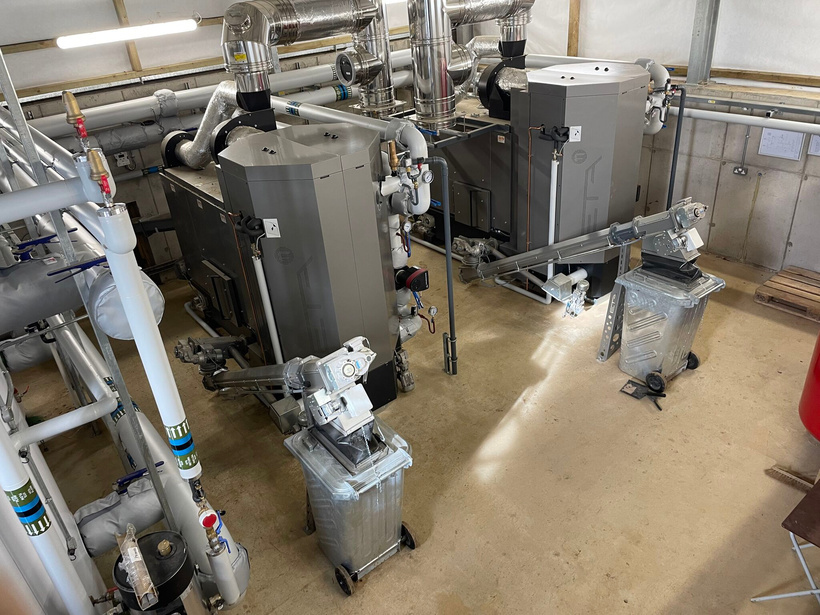
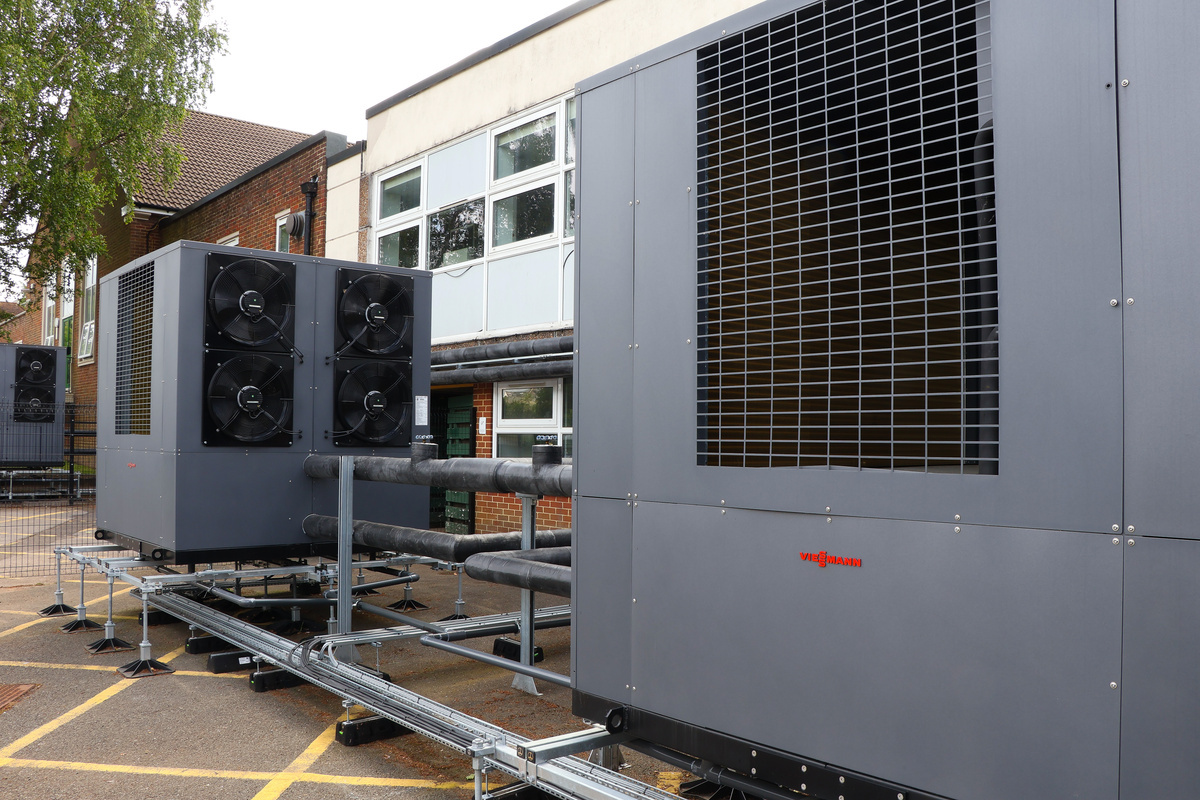
Hockerill College has replaced gas-fired heating systems with a combination of biomass and air source heat pump (ASHP) technologies. The work, supported by a £555k grant through the Public Sector Decarbonisation Scheme (PSDS) and project-managed by ReEnergise, included a new district heating system for student accommodation and the Science Building, and ASHPs for a separate music building.
The project is expected to save approximately 84 tonnes of CO₂e per year and approximately £11,000 annually in energy costs.
Background
Prior to this project, Hockerill College relied on gas for all its heating and hot water. The college partnered with ReEnergise to transition to low-carbon heating systems and reduce long-term energy costs.
The challenge
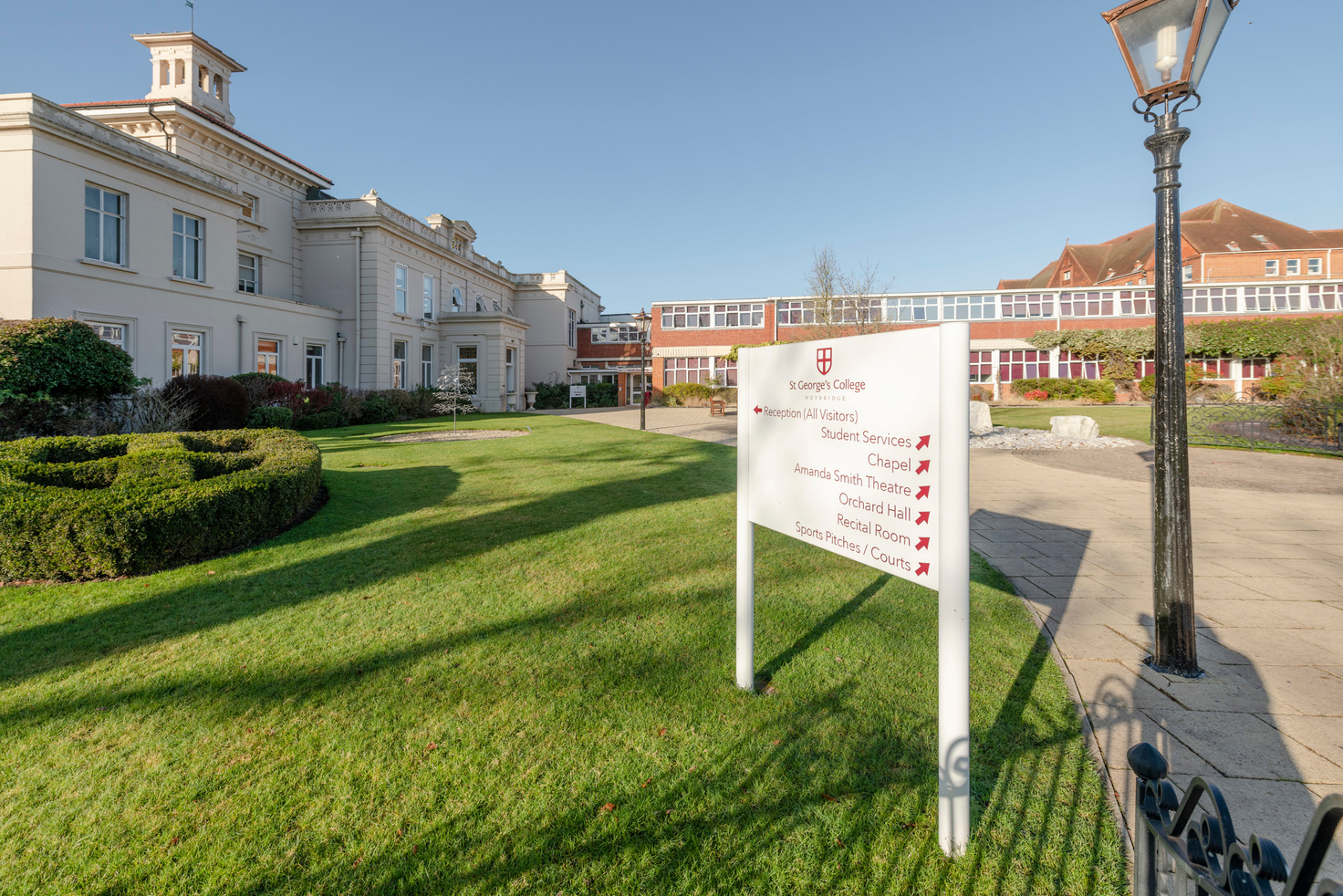
The college site posed several logistical challenges. For example, the need to minimise visual impact due to its location in the Bishop’s Stortford conservation area, and tight site conditions for construction. The project team also needed to avoid any disruption to heating supply during term time and maintain clear communication with the college throughout.
The solution
The original system had been scoped to be a Ground Source Heat Pump (GSHP) system, but during the outline design stage it was determined that the resulting changes required to the internal distribution system would exceed the anticipated grant budget. It was therefore agreed with the college to opt for a biomass system. The biomass installation was built below ground to minimise impact on local views.
The Music Building, also in scope for the project, was better served by opting for a separate stand-alone ASHP system due to its distance from the biomass energy centre.
Energy efficiency improvements included new VSD pumps, and a water treatment system to mitigate hard water issues.

Implementation
- Subsurface biomass energy centre installed due to restricted access.
- ASHPs deployed to serve the separate Music Building.
- Weather compensation has been utilised on both systems to allow them to reduce consumption by altering the output in line with the weather conditions at the time.
- Water treatment device added to help prevent corrosion of the system.
- Project duration: 12 months (2 months for system installation).
- Ensuring no downtime to heating during the switch-over period.
Technology
- Biomass boilers using sustainably sourced woodchips.
- Underground fuel store and plant room.
- Air Source Heat Pumps for heating a separate building.
- Variable Speed Drive (VSD) pumps.
- Water treatment device (Elysator).

Business case
- Annual CO₂ savings: approximately 84 tonnes.
- Annual financial savings: approximately £11k.
- PSDS-funded with client contribution.
Results
- £555k in grant funding successfully drawn down.
- Delivered under budget and on time with contingency remaining.
- Improved heating system reliability and efficiency.
- Enhanced occupancy comfort and reduced environmental impact.