
In all our work we apply systems thinking, step by step risk reduction, and collaboration.
That approach ensures our capabilities are deployed the most effectively.
Systems Thinking
Every site uses power and heat systems; some also use transport. Specific systems have often been introduced in isolation, as sites have grown over time. But to our engineers every site is a system of systems and needs to be considered as an integrated whole, even if the brief is only to tackle a specific issue in one part of the site. If that systems approach is not applied then there is a distinct danger that an individual power, heat or transport system could be modified or upgraded in isolation, with seemingly good intention but in practice to the detriment of the whole. In contrast, by taking this systems approach we are able to identify innovative opportunities that would otherwise be overlooked.
Step-by-step risk reduction
For projects we apply a step-by-step risk reduction process designed to avoid clients wasting time or money on dead ends or expensive mistakes. The process is shown below:
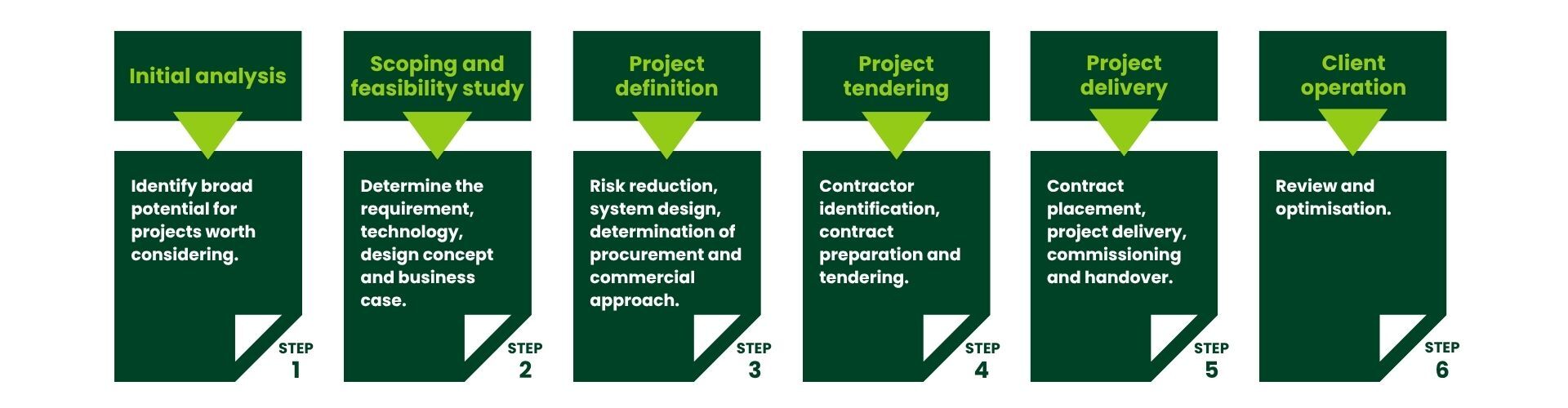
Each step is progressively more substantial: major expenditure is not until Step 5. Each step is designed to clarify and resolve issues as required, to de-risk the next step before progressing. The process can be halted at any step should some unforeseen show-stopper occur or should a client’s circumstances change such that the project is no longer considered worthwhile. The process is similar to the Royal Institute of British Architects (RIBA) process but we have adapted it to suit energy systems projects on complex sites.
Collaboration
Like architects, we prefer to establish long-term relationships with clients, to see programmes of work through from start to finish and be engaged every step of the way. This is particularly important to support effective collaboration. The issue is that every project inevitably entails striking a balance between competing factors, normally budget versus capability, but often there are other nuances vying for attention. Establishing the right balance will require an iterative process of collaboration between the client and ReEnergise, because it entails trade-offs, and the client can only sensibly decide that balance having been shown the impact of the various trade-offs by ReEnergise. Likewise, we can only provide sound advice if we understand the nuances of the client strategic intent. Getting that right takes partnerships and time working together. It is consistent with the step-by-step approach.